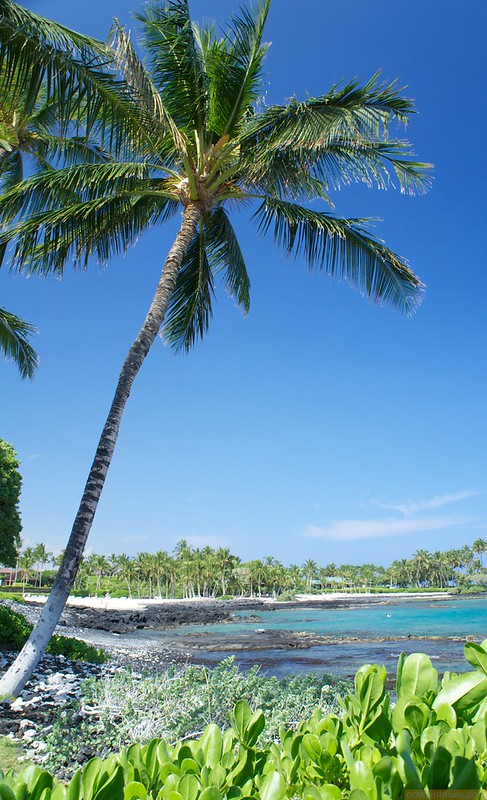
Within the Hawaiian Island chain, the southernmost island stands out as the largest within the archipelago. It’s quite a fascinating island as you will learn from these facts.
An island that goes by many names
Hawaii’s biggest island is known by several names. You might see or hear it as “Hawaii Island”, “Island of Hawaii”, “Big Island”, “Hawaii’s Big Island”, “the Big Island of Hawaii”, and, simply “Hawaii”.
After more than a year of discussion, in 2025, the Hawaii Board voted to change the name of “Island of Hawaii” to simply “Hawaii” to bring the name of the island in line with every other island in the state and be more culturally respectful. The name change to just Hawaii is under federal review.
With so many names, there can be some confusion, especially when the name of the state is also the name of an island. In all our travels around the Hawaiian Islands, we most commonly hearHawaii’s largest island called the “Big Island” from locals.
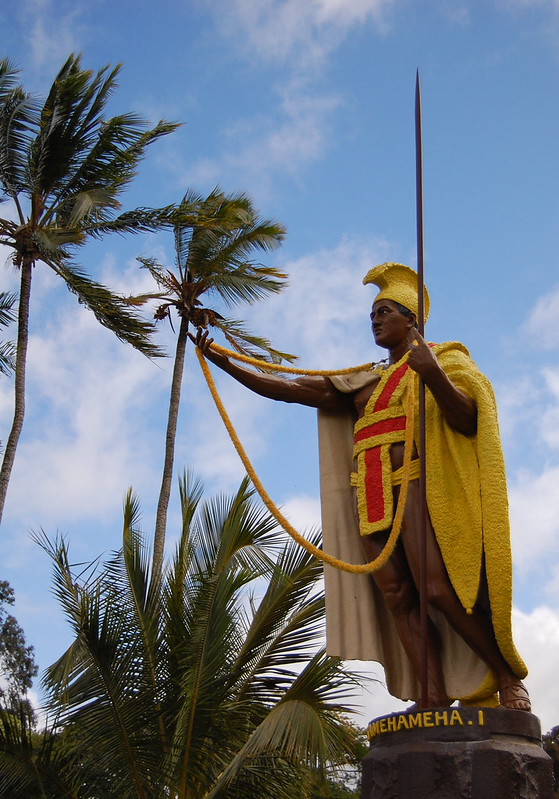
Hawaii’s first king was born on the Island of Hawaii
King Kamehmeha the Great was born on the Big Island of Hawaii in 1758. By 1810, he had conquered and united the Hawaiian Islands under his royal kingdom. He brought the islands under the name of his home island, Hawaii Island, setting the stage for the entire island chain to be named after his united kingdom.
The Big Island is bigger than all the other major Hawaiian Islands put together
Hawaii’s Big Island stretches across approximately 4,028 square miles. All the other islands combined measure up to be approximately 2,400 square miles. That means the Big Island accounts for approximately 63% of the state’s total land.
As a nice segue to our next two points, the Big Island is still growing…
The Big Island was formed by five volcanoes
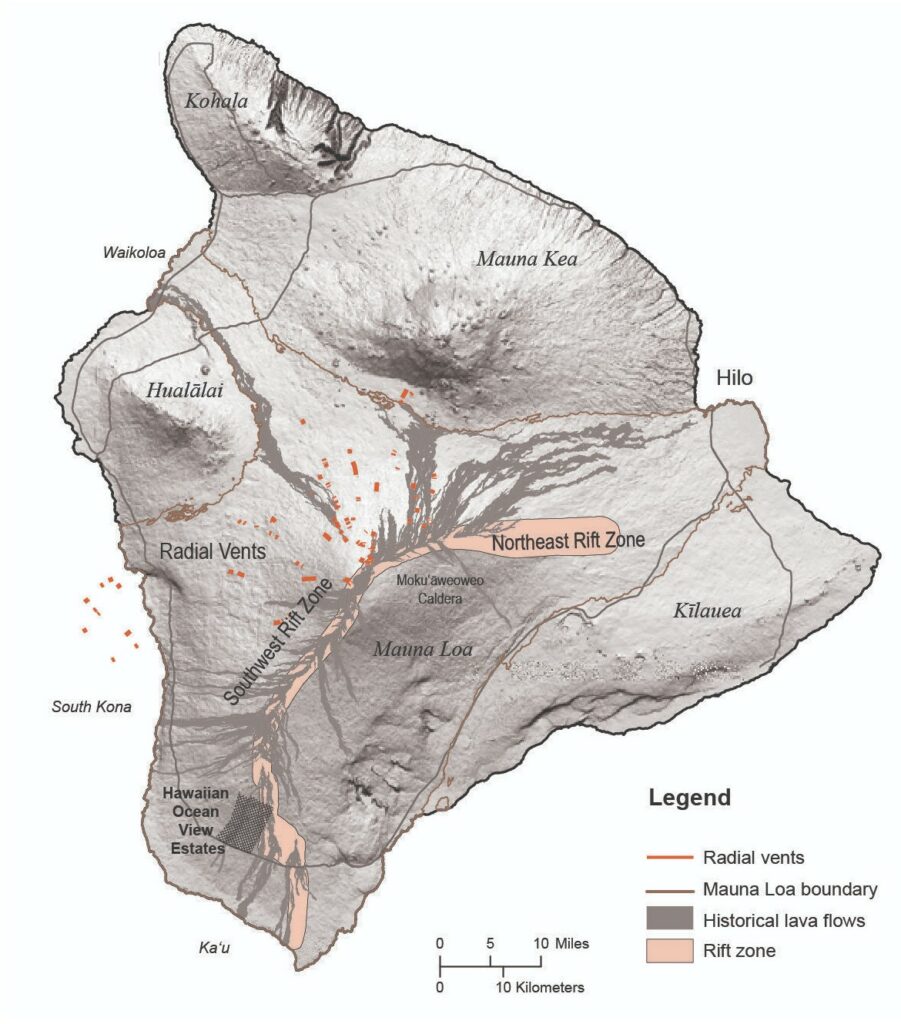
While most of the other Hawaiian islands were built from one or two volcanoes, the Big Island is made of five different volcanoes–Kohala, Hualalai, Mauna Kea, Mauna Loa, and Kilauea.
Four of the five volcanoes on Hawaii’s Big Island are active
Of the five volcanoes that make up the Big Island, four of them are considered to be active. Only Kohala is deemed to be extinct. Here’s the list of volcanoes on Hawaii’s Big Island that are still considered to be active:
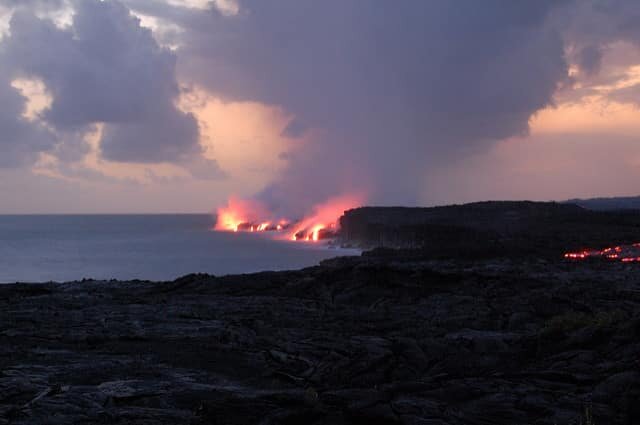
Kilauea is the youngest and most active of all volcanoes. As of 2026, its eruptions are ongoing. With the current series of eruptions, lava is being added to the summit. In recent decades, lava flowed to the ocean, which extended the footprint of the island.
Mauna Loa is the largest volcano on Earth. It most recently erupted in 2022 after a 38-year pause.
Hualalai is the third most active volcano on the Island of Hawaii, though its most recent eruption was quite a while ago in 1801. The Kona airport (KOA) sits on the lava flows from Haulalai.
Mauna Kea is dormant, but still considered to be active. Its most recent eruption estimated to have occurred roughly 4,500 years ago.
Hawaii’s Big Island has the tallest mountain in the world
With the base of Mauna Kea measured from its underwater base to its peak, it reaches a total height of 30,610 feet, which exceeds the height of Mount Everest at 29,032 feet. In terms of height above sea level, Mauna Kea reaches 13,803 feet, so most of it’s overall height is underwater.
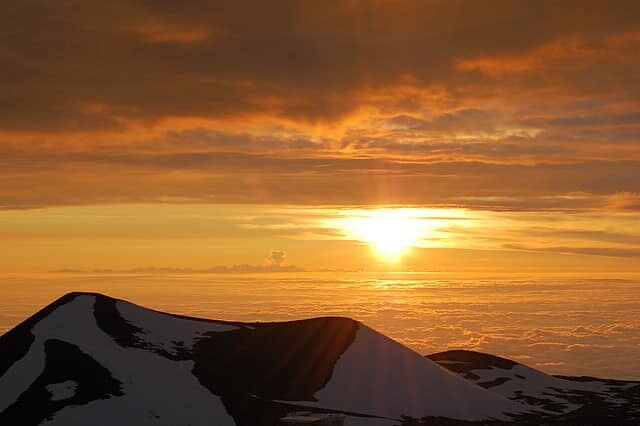
Mauna Loa is a tall mountain, as well. It’s only about 125 feet shorter than Mauna Kea.
When we fly to Hawaii and we’re on a side to look towards Hawaii’s Big Island, I always try to look for Mauna Loa and Mauna Kea. They can come into view, often above the clouds, even from many miles away.
The Island of Hawaii has four of the five Koppen-Geiger climate classification groups.
The following graphic summarized the Koppen-Geiger climate classification system. Note the four climates that Hawaii has. The only climate that Hawaii doesn’t have is the Cold, Continental Climate that is distinguished by having at least one month where the average temperatures are below 50° Fahrenheit.
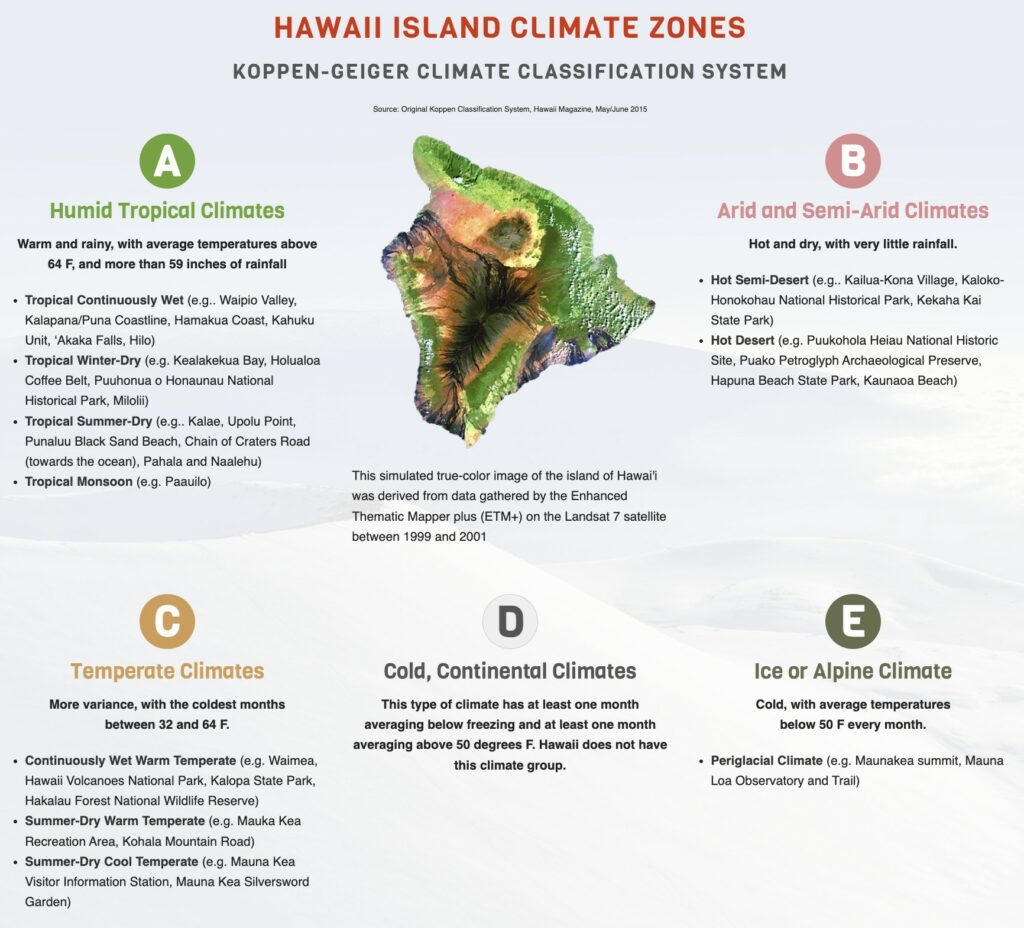
You probably knew that Hawaii has humid, tropical climates, but did you know that the island also has arid climates and an alpine climate? I always marvel at the contrast in climates on Hawaii’s Big Island. We’ve gone from a warm, sunny Kohala beaches up to the snow-covered summit of Mauna Kea in under two hours.
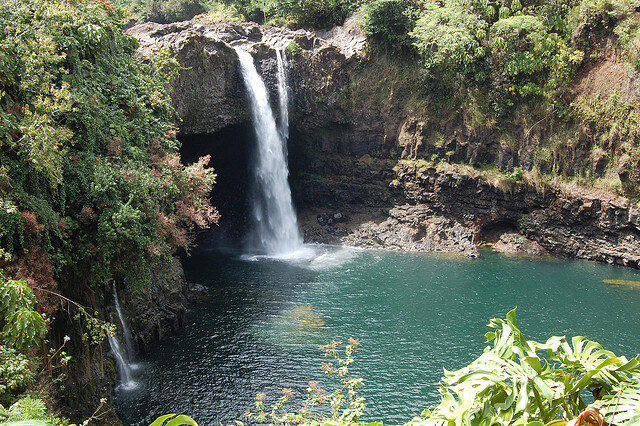
Another fascinating contrast of climates is to go from the arid climates on the western side of the Kohala coast to the lush, tropical environment on the east side of Kohala in less than an hour. It amazes me. See our recommendations for scenic driving on the Kohala coast to see these contrasts in climates.
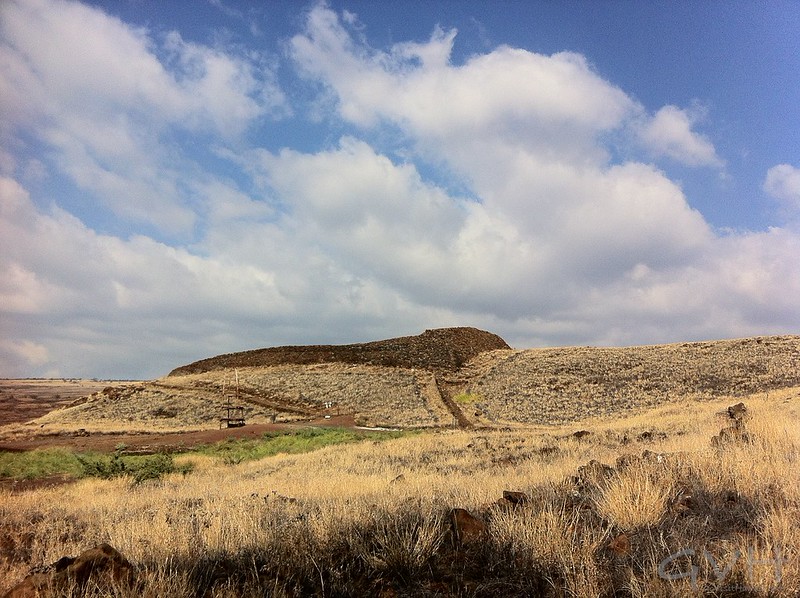
Yet another amazing contrast of climates is to go from the eastern, Hilo side to the western, Kona side of the island. The difference between the lush windward side of the island is in sharp contrast to the arid leeward side. (Learn more about windward and leeward climates in Hawaii.)
For more details on Hawaii’s fascinating climates, see this article.
The Island of Hawaii has two international airports
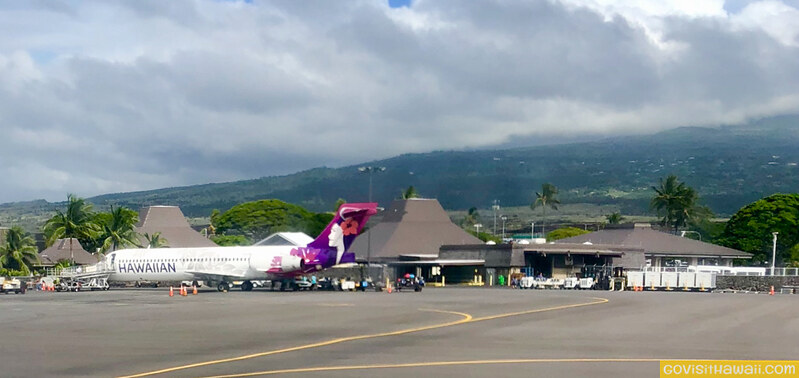
Another sign that Hawaii’s Big Island is large is that it’s the only Hawaiian island with two international airports. On the east side of the island, there’s Hilo International Airport (ITO). On the west side, there’s Ellison Onizuka Kona Internationa Airport (KOA). Make sure you know which airport to fly into for your Big Island of Hawaii vacation.
Hawaii’s Big Island has four national parks
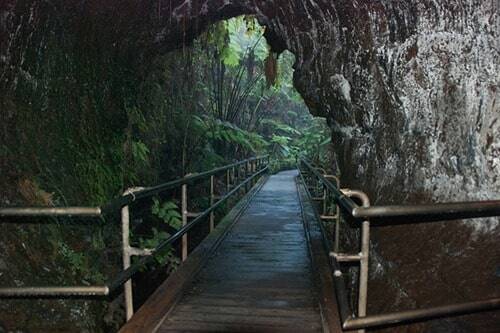
The volcanic landscapes and history of Hawaii’s Big Island is featured in four, excellent national parks. Those parks are:
Additionally, the Big Island has a national trail, Ala Kahakai. All of these national treasures are truly fascinating to explore.
In contrast to the Big Island’s abundance of national parks, there are only two other major national parks in the Hawaiian Islands. Maui has one major national park, Haleakala, and Oahu has one major national park, Pearl Harbor.
The Big Island of Hawaii has white, golden, black, and green sand beaches
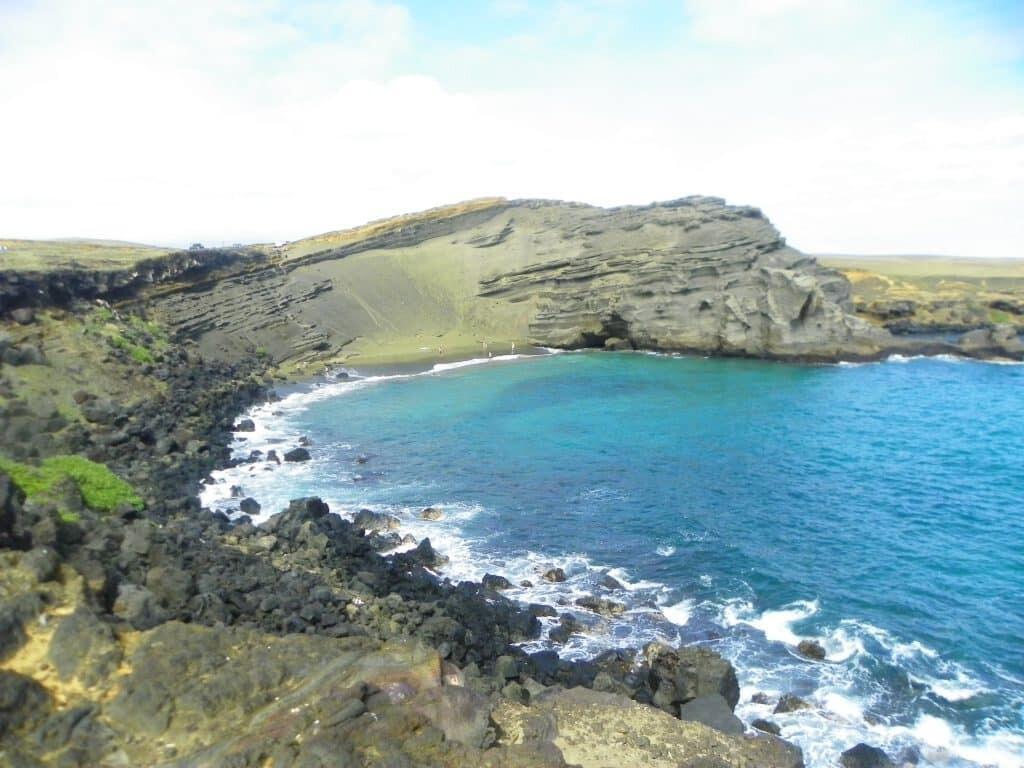
You probably already knew that Hawaii has white, golden, and black sand beaches, but did you know that Hawaii’s Big Island has a rare green sand beach? Papakolea Beach on the south side of the island is a green sand beach. It is one of four known green sand beaches in the world.
The Big Island is not the island where Waikiki and Honolulu are
Finally, this last point actually trips up a lot of folks. Due to the popularity of Waikiki and Honolulu on the island of Oahu, many visitors errantly assume that Oahu is the Big Island. Though Oahu has the biggest population of the state, it is not the biggest island in terms of landmass and it is not known locally as the Big Island.
—
See our Hawaii, Big Island vacation planner for advice on what to see and do on a Big Island vacation.


 Sheila Beal