Archive for March, 2008

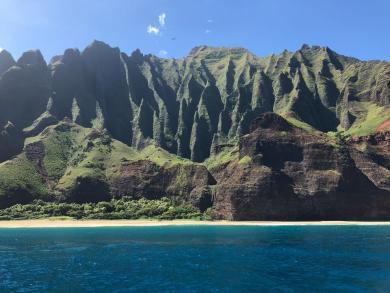
  • The National Geographic has a very good article on Kauai’s Na Pali Coast. Their beautiful photo gallery includes a photo of a double rainbow at the Kalalau Valley.
  • I really enjoy Cheryl Chee Tsutsumi’s Hawaii’s Back Yard articles at the Star Bulletin. This week she writes about a unique train ride, hike, and orchard lunch tour in Kauai on Kauai Plantation Railway.
  • The Halemaumau crater at the summit of Kilauea Volcano exploded last week. This was the first explosion at this particular crater since 1924. The summit overlook was a popular stop along Crater Rim Drive. Due to high sulfur dioxide emissions as well as the damage from the explosion, this overlook will remain closed.
  • Aloha Airlines is filing bankruptcy, again. If you are already booked on an upcoming Aloha Airlines flight, I wouldn’t panic about it, but certainly keep an eye on the situation. If you are about to book an interisland flight, then you might be better off considering Hawaiian Airlines, Island Air, or go. (See Cranky Flier’s take on the situation.) In all my trips to Hawaii, I just had my first Hawaiian Airlines flight a couple of weeks ago. It was a flight from Honolulu to Kona. It was a great flight. We had pre-assigned seating and they provided us with a map of the Big Island. I’ll definitely be leaning towards Hawaiian Airlines for future flights.
Sheila

Happy Easter

Cross at Hana

This cross photo was taken in Hana on Maui.

Invisible Cows?

I just had to take a photo of this sign at the Mauna Kea Visitor’s Center. Though it’s kind of a quirky photo, I can see how the advisory is needed. On our way up to Mauna Kea we passed by acres and acres of ranch lands. We also passed through areas of dense fog. At night there are no street lamps nearby, so it gets really dark–dark enough that cows hang out in gangs and go on the prowl. :-)

Sheila

Big Island Sunset at Mauna Kea

Sunset at Mauna Kea

We captured the photo just at sunset last night. We were standing close to the very top of Mauna Kea at nearly 14,000 feet above sea level. That’s snow on the cinder cone and a blanket of clouds leading out the the horizon. I’ll have more on our visit to Mauna Kea with advice within the next week.

Sheila

Free Entertainment on the Big Island

IMGP1430

If a Big Island luau doesn’t fit in your vacation budget, but you’d still like to hear live Hawaiian music or see a hula dance, then you’re in luck.  You can find some good free shows on the island.  Here’s where to find the some of the good free stuff:

  • The Shops at Mauna Lani offers free shows every Monday, Wednesday, Thursday and Friday evenings.  You can learn more about the various shows and times here
  • The Kings Shops in Waikoloa have free evening shows Monday through Saturday.
  • The Queens Marketplace in Waikoloa have several free or low cost Hawaiian craft making classes as well as free traditional Hawaiian entertainment.  See this link for their listings
  • Many hotels offer free live music, usually in their lounge area. So ask your hotel what free entertainment they offer.

Here’s a short video sample of the type of free entertainment you might find.  This video was filmed at the Kings Shops stage in Waikoloa.


If you are looking for other budget-minded things to do on the Big Island, then don’t miss our suggestions for the best Big Island budget activities.   

In January, the National Parks Service promised to released another statement on downhill bike tours in March.  This week, that decision was released.  The park will continue their safety stand-down and prohibit the biking from beginning inside the park with a commercialized tour companies.  Please note that bike tours have continued to operate outside the park’s boundaries.

Park officials announced that they will issue permits for more bike tour companies to enter the park for vehicle tours of the park prior to beginning the downhill bike ride outside of the park.  Previously only two of seven bike tour companies had permits to bring their customers inside the park.  I hope this will result in more options and better pricing.

Source

Sheila

Tips for Driving the Road to Hana

Coast View along Road to Hana

In my opinion, few drives are more beautiful than the Road to Hana on Maui. It’s a curvy coastal road with views of cliffs, beaches, waterfalls, and rainforest. It’s a well paved road, but you do need to keep your wits about you when you drive it because of the many sharp curves and one-lane bridges.

Before we dive into the tips, let me be clear about what I mean about the Road to Hana. Take a look at this Google map below and notice Highway 360, also known as the Hana Highway. That’s the Road to Hana. I want to make it clear that I am not referring to the Palani Highway that brings you to Hana from the South. (Note: that rental car companies advise that you don’t drive the Palani Highway. Plus, a portion of the road is closed due to earthquake damage.)
View Larger Map

I should bring up one more important point. If you are prone to carsickness, then this drive isn’t for you. Don’t even think about it, without using something to help you combat carsickness.

Here are my top tips for enjoying your drive on the Road to Hana.

  • Definitely plan to make a whole day of the drive there and back.
  • Share the driving time with your travel companions, if possible. The drive can be stressful for one person. Consider whether you should add an additional driver onto your rental car contract as most contracts only allow one driver as a standard. Additional drivers can be added for a fee.
  • Get a good Maui guidebook that will detail what to see along the way. Find one that provides references by mile markers. (I’ve used Maui Revealed in the past and found it was a good reference. Just make sure you never trespass or do any hiking or swimming that are beyond your skills. If it looks dangerous, it probably is!)
  • Try to get an early start, say around 7am. You’ll avoid traffic with an early start.
  • Avoid driving a long distance on this Road to Hana at night.
  • If you notice a local driving behind you or a long line of cars, please be considerate and pull over to allow cars to pass as soon as you find a safe spot to do so.
  • Do drive beyond Hana to the Kipahula area which about 10 miles beyond Hana. See the Oheo Gulch with the cascading pools and spend a bit of time walking around this area. Note that this area is part of Haleakala National Park. So, when you purchase entry into the park, it is valid for both entry points for 3 days from purchase.
  • I like to drive all the way to Kipahula, then back to Hana and stop into the Hana Hotel for lunch on their lanai. The hotel grounds are beautiful and it makes for a nice relaxing break from all the driving.
  • Don’t miss the black sand beach at Wainapanapa State Park.
  • Bring sunscreen, water, snacks, and mosquito repellent (particularly if you are going to do any hikes)
  • Make sure you have a full tank of gas before you start the drive. Gas stations are few and far between!
  • If you think you might do any swimming, then make sure to bring beach towels.
  • Always lock your car if you are going to be leaving it.
  • Don’t forget your camera with lots of film/memory and fully charged batteries.
  • On your way back to your hotel, don’t miss watching the windsurfers on Hookipa beach.

Have you driven the Road to Hana? What did you think of it? What tips would you add? Please share them.

IMGP1370

It’s so easy to get distracted by the beautiful scenery in Hawaii, but you do need to keep your wits about you, even in paradise. Here are some tips to keep your valuables protected:

  1. Be sure that you always lock your rental car and hide valuables completely out of sight. Don’t leave anything in sight that would tempt someone to break into the car.
  2. Many rental cars have alarm systems, so make sure you activate the alarm as you leave the car.
  3. Try to leave as many valuables as possible locked away in the safe of your hotel room or condo, if you have one. If I don’t have a safe available, I’ll lock valuables in my luggage.
  4. One little trick I do is that I try to hide maps and guidebooks if I’m going to be leaving the car for several minutes. I try not to make it too obvious that I’m a tourist.
  5. Take your valuables with you.

Please don’t get me wrong, there’s not going to be a thief perched and ready to pounce on you at every corner. That’s not the case at all! Hawaii is really no different from any other tourist destination in that it has it’s own issues with opportunistic thieves. Just be careful, even when the scenery distracts you.

Here’s the news on today’s St. Patty’s Day edition.

  • Delta and Hawaiian Airlines are partnering on earning and redeeming frequent flier miles
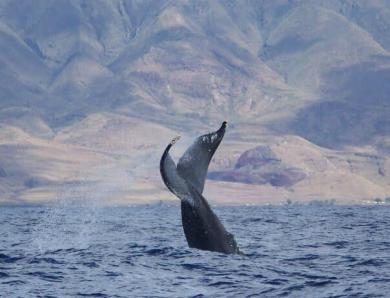
  • New research conducted in Hawaii’s waters indicate that young humpback whales make noises.
  • What’s the average cost of a hotel room in Hawaii?  The recent numbers indicate a statewide average cost of $211 per night.  Maui rates are on the rise at $280 while Oahu continues to offer the lowest rates at $179.  Kauai averaged $218 and the Big Island cost an average of $198 per night.  (Source)
  • Go Visit Hawaii was awarded an honor by Homespun Honolulu.  This blog was rated "E - for Excellent".  Mahalo, Evelyn, for your support and encouragement!
  • And finally, as it’s St. Patrick’s Day, I’ll post a photo of something green.  Here’s a photo of the green pasture land on the Kohala Mountain of the Big Island.  I’ve been to Ireland and the rolling green hills along route 250 of Hawaii reminded me of the landscape of Ireland.

Kohala Mountain

DSC_0929

It was humbling and mesmerizing experience to watch lava flowing into the ocean. I struggle to find the adequate words to describe it. If you are able to get out to the Big Island to see if for yourself, then I strongly encourage you to do so.

I wanted to share some tips for viewing the lava so that you can make the most of your experience. Here are my suggestions.

When to Go
Try as best as you can to see the lava around sunset and just afterwards. We were able to see the lava during daylight hours and then at sunset and about an hour afterwards. The sun’s rays wash out the incandescence of the lava, so you can’t really see as much of it in the daytime. We were fortunate enough to see the contrast of daytime viewing and nighttime viewing. There really is a huge difference in what you can see. If you go to see the lava just before sunset, you’ll be able to walk to the lava viewing point more safely in the daylight hours. Note that the current viewing point does not open until 2pm and closes at 10pm. Cars are not allowed to enter past 8pm.

Where to Find the Lava
At the present time, you’ll find the lava flowing at the end of Highway 130 on the East side, not far from Kalapana. You can use the links on this page to find the lava.

What to Wear
- One of the most important things to wear is shoes with a rugged sole and good gripping tread, such as hiking shoes. You’ll be trekking over very uneven surfaces (hardened lava) and a shoe with a firm or semi-firm sole will help you keep your balance. If you’ll be very close to the actual flow, a shoe with a good sole will protect your feet from the heat. I observed a few people wearing flip flops or fancy shoes and they had a very difficult time walking. I wore my hiking shoes and I was so glad I did.

- If you’ll be seeing the lava during day light hours then be sure to wear sunscreen and a hat or visor. Sunglasses are also helpful.

- You should try to wear long trousers to protect your legs if you fall. Hardened lava can be sharp as glass and quite dangerous if you fall. I wore a light weight hiking trousers.

- One reader, Ben, advises to wear gloves to protect your hands should you fall. Pick up a pair of work gloves from the dollar store.

What to Bring

- Water is a must, particularly if you’ll be going to see the lava in the daytime.

- Snacks or energy bars may come in handy. There are no restaurants in the area.

- Flashlight for finding your way in the dark. The county has installed some reflective poles and some yellow tape on the ground to help you navigate to and from the viewing point.

- Binoculars will help you get a closer view. You may be a couple of hundred yards or more from the lava.

- Cameras with well charged batteries and plenty of memory or film. Near the water, it’s quite windy, so if you have a tripod, do bring it

- A hiking stick or pole helps to keep you steady over uneven terrain.

- Sunscreen and lip balm with sun protection.

- Wet wipes. (There are port-a-johns, but no way to clean your hands.)

- If you have long hair, you may want to bring something to tie it back because it can be very windy near the ocean.

- Band-Aids and antibiotic ointment, in case you fall.

- Depending on where you’ll be going, you may want to have some mosquito repellant. After viewing the lava in the daytime, we walked back to our car to escape the sun and sit on cushioned chairs while we waited for sunset. We rolled down the windows and ended up getting some mosquitos in the car. Luckily we had our mosquito repellant with us.

Other Important Considerations

IMGP1375

- The earlier you get there the better parking space you’ll get. The current lava viewing point opens at 2pm. We got there just shortly after it opened and had a prime parking space. As we left the parking area later in the evening. We noticed several people having to walk for at least a mile on a dusty, gravel road.

- Be aware of the many dangers of being around active lava.  (Mahalo to Angie for the link.)

- Obey all signs and instructions provided by the county employees. (Hey, how about thanking them for establishing this viewing point for visitors to see.)

- Lock your car doors and put valuables out of sight.

- If you are thinking of going to see the lava from the West side of Hawaii, then plan on about a 2.5 hour one way drive.

- Finally, enjoy this rare and awesome display!

« Prev - Next »